Blow drying isn’t inherently bad for your hair — but how you dry it matters far more than whether you use a hair dryer at all. Recent scientific studies, including findings published by the National Institutes of Health, show that heat can damage the hair surface, while letting hair stay wet for too long can harm deeper structural components. The goal isn’t to avoid heat forever — it’s to use it in a safe, controlled, and evidence-based way.
Key Takeaways
- Blow drying isn’t inherently damaging; problems come from high heat, close contact, or over-drying.
- Air drying isn’t always safer—hair that stays wet for hours can develop internal structural stress.
- Low to medium heat from 6–8 inches away minimizes cuticle disruption and protects the cortex.
- Dry hair to about 70–80% before using a dryer and always apply a heat protectant.
- Different hair types require different drying methods, but controlled heat is safe for all when done properly.
What Science Says About Blow Drying and Hair Damage
The hair shaft is made of three major layers:
- The cuticle (outer layer)
- Cortex (middle layer responsible for strength and color)
- Medulla (present mostly in thick hair)
Most forms of heat damage affect the cuticle first. When the cuticle lifts or cracks, hair becomes dull, rough, and prone to breakage.
However, research shows an important nuance: the cortex — the part of the hair people worry about most — is not easily damaged by typical blow drying temperatures. Even in controlled high-heat tests, the cortex remained intact.
Even more surprising? Leaving hair wet for long periods can stress the cell membrane complex (CMC), the layer responsible for moisture regulation and internal cohesion. According to the NIH-published study, the only group that showed CMC damage was the naturally air-dried group. This means that “air drying is always safer” is a myth — especially if your hair takes a long time to dry.
Blow Drying vs. Air Drying: Which Is Healthier?
Both drying methods have benefits and drawbacks. The healthiest option depends on how you use them.
Air drying keeps hair away from heat but prolongs the amount of time the shaft stays swollen with water. This can strain internal structures and lead to roughness, frizz, and weakened bonds — especially in dense, thick, or curly hair types that stay wet longest.
Blow drying can cause surface-level cuticle damage when done incorrectly, but controlled heat from a safe distance causes significantly less structural harm compared to hours of water exposure. Studies show that blow drying from about 6 inches away on low to medium heat keeps cuticle disturbance low while shortening drying time enough to protect the CMC.
In other words: neither method is automatically good or bad — it’s all about technique and timing.
The Temperature Thresholds That Matter
Scientific literature and lab testing reveal several important temperature ranges:
- Below 140°F (60°C): Minimal cuticle disruption and safer for routine drying.
- Around 158°F–176°F (70°C–80°C): Cuticle swelling increases but is manageable with protectant.
- Above 284°F (140°C): Irreversible cuticle damage begins.
- At 392°F (200°C): Severe damage occurs quickly and affects both cuticle and internal moisture stability.
You don’t need to memorize exact temperatures — hair dryers don’t show them anyway. But these findings confirm a clear rule: high heat is never necessary for drying, and cool-to-medium heat is enough for most hair types.
How to Blow Dry Your Hair Safely: The Evidence-Based Method
Heat damage isn’t caused by blow drying itself — it’s caused by overheating, over-drying, or concentrating heat in one area. The following steps align with both scientific findings and professional styling practice.
- Start by removing excess water without friction. Use a microfiber towel or cotton T-shirt to gently squeeze out moisture. Avoid rubbing — friction roughens the cuticle.
- Never blow dry dripping-wet hair. Let your hair air dry until it’s about 70–80% dry. This shortens heat exposure and reduces the risk of bubbling inside the hair shaft.
- Apply a heat protectant. Heat protectants help distribute heat more evenly and significantly reduce cuticle disruption. Silicone-based formulas have the strongest lab-verified heat buffering effect.
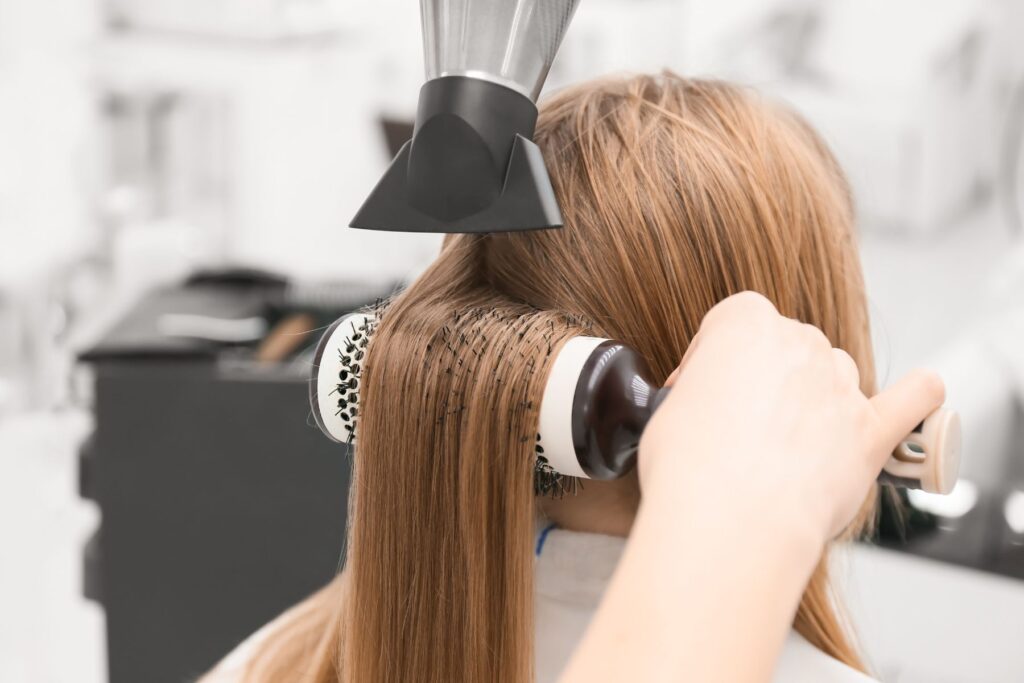
- Keep the dryer 6–8 inches away from your hair. This distance was shown to minimize cuticle cracking even when temperatures were moderately warm.
- Always keep the dryer moving. Holding heat in one place overheats the cuticle. Continuous motion reduces localized damage.
- Use medium heat for most of the drying and switch to cool air to finish. Cool air seals the cuticle and boosts shine without additional stress.
- Stop when your hair is dry — not hot. Over-drying removes internal moisture and increases brittleness.
For more help creating lift, shine, and shape, see our guide to achieving a bouncy blowout that lasts.
Drying Tips for Different Hair Types
Different textures respond differently to water and heat. Tailor your routine to your hair’s needs for better protection and finish.
Curly and Coily Hair
- Use a diffuser to evenly distribute airflow.
- Keep heat low to maintain curl pattern and prevent frizz.
- Leave a little moisture in the hair to avoid over-drying delicate curls.
Fine or Fragile Hair
- Use the lowest heat setting because fine strands heat up quickly.
- Avoid heavy products that weigh hair down and trap moisture.
- Stop drying early to preserve elasticity.
Thick or Dense Hair
- Section your hair to reduce drying time and avoid repeated passes.
- Use medium heat with strong airflow — this shortens the wet stage, which is beneficial for protecting the CMC.
- Work from roots to ends to maintain an even finish.
When Blow Drying Can Actually Be Healthier
Certain situations make blow drying the safer choice:
- Your hair takes several hours to air dry. Long wet phases increase internal swelling and CMC stress.
- You have a dense or highly porous hair type. These textures trap water longer, making gentle blow drying beneficial.
- You struggle with tangles or breakage when hair dries naturally. Controlled heat can smooth the cuticle and reduce friction.
Professional Treatments That Support Heat Styling
If you style with heat regularly, adding restorative care can help keep your hair healthy.
- Deep conditioning masks to replenish moisture lost from heat exposure.
- Protein treatments to reinforce weakened cuticles and improve elasticity.
- Glossing or sealing treatments to create a smoother cuticle layer and enhance shine.
If you want professional blow drying or a treatment plan tailored to your hair type, visit Artists & Architects Salon in Ridgewood, NJ.
Final Thoughts
Blow drying is neither the enemy nor a requirement — it’s simply a tool. When you use it safely, keep heat moderate, protect your hair, and avoid over-drying, you can style your hair efficiently without compromising long-term health.
Your hair type, drying time, and daily routine should guide your approach. Pay attention to how your hair responds, adjust your technique, and choose the method that keeps it strongest and healthiest.